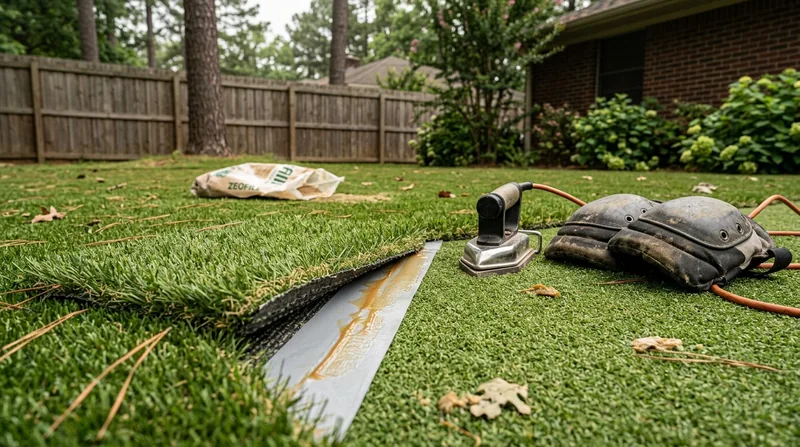




Synthetic turf installed in Tyler's rolling Piney Woods neighborhoods faces a unique set of repair challenges. Between the sandy loam and sticky red clay, the weight of pine needles in fall, and the intense East Texas heat and humidity, seams can separate, edges can lift, and high-traffic areas can flatten or show wear patterns that compromise the look and function of your installation. Turf repair and seam repair in Tyler isn't always a full replacement job, and catching damage early keeps your investment sound. Tyler Artificial Grass Installation has been diagnosing and repairing synthetic turf since 2013, working on everything from residential yards in the Azalea District and Charnwood to pet turf installations in Whitehouse and Bullard, and commercial properties across the East Texas market. Whether a seam is opening up, an edge is peeling, or a section has melted from window reflection, we identify the root cause, repair it right, and document the work so you know exactly what was done.
Why Turf Repair and Seam Repair Matter in Tyler's Climate
Tyler's humid summers, heavy spring thunderstorms, and the constant carpet of pine needles create conditions that stress synthetic turf differently than a dry desert climate. Moisture trapped under seams, ground movement from clay expansion and contraction, and UV exposure to aged infill all contribute to premature wear. A seam that opens up isn't just a cosmetic issue, it becomes an entry point for moisture, pet odors, and debris that undermine the turf's drainage and longevity.
- We inspect seams for separation, lifting, or delamination and re-glue or re-stitch them using the same adhesive and technique as the original installation.
- We identify and repair lifted edges caused by ground movement, improper base settling, or water pooling along the perimeter.
- We address melt spots from window reflection, heat damage, or UV degradation by patching with matching turf and reinforcing the repair site.
- We assess drainage around the turf to prevent water from collecting under seams and causing future separation.
- We document every repair with photos and notes so you have a record of what was done and why.
Catching and fixing these issues early prevents small repairs from becoming full-yard replacements.
Key info: Tyler homeowners often discover seam separation in spring after the freeze-thaw cycle of a mild winter, or after heavy rains when the clay beneath the turf shifts. We've repaired dozens of yards in Tyler's older brick ranches on wooded lots where pine needle accumulation and shade-driven moisture create ideal conditions for seam stress. Catching it early saves money.
For more information on how turf is installed correctly the first time, see our residential artificial grass installation page.
How We Diagnose and Repair Turf Damage in Tyler
Turf repair starts with a careful on-site inspection. We walk the entire yard, check seams under different lighting, test the firmness of the base, and look for signs of water pooling, pet damage, or UV degradation. Once we understand what happened and why, we choose the right repair method, source matching turf if needed, and execute the fix so it blends invisibly with the surrounding installation.
- We schedule a free site visit and photograph the damage from multiple angles to document the condition before repair.
- We diagnose the root cause, whether it's seam adhesive failure, base settling, improper drainage, or heat or UV damage.
- We source matching turf (face weight, pile height, color lot) if a patch is needed, or obtain the original turf spec from your installation records.
- We remove the damaged section carefully, prepare the base, and re-lay the turf using the same adhesive, seaming tape, or stitching method as the original.
- We test seams for strength, inspect drainage, and clean up the work area before we leave.
- We provide a written summary of what was repaired, materials used, and any ongoing care recommended for that area.
The goal is to make the repair invisible and restore full function so the turf performs as it did when new.
Example: A homeowner in Bullard called us about a lifted edge along the back fence line where water was pooling after spring rains. We found that the base had settled unevenly and the perimeter drainage wasn't adequate. We re-secured the edge, regraded the base to improve drainage, and added a swale on the low side. The repair took one day and cost less than half a full replacement, and the yard has stayed dry ever since.
For details on our turf cleaning and maintenance services, which help prevent some repair issues, visit that page.
Turf Repair Methods and When to Use Each
| Repair Method | Description | Best For |
|---|---|---|
| Seam Re-gluing | We cut back the lifted seam, remove old adhesive, clean the base, apply fresh polyurethane adhesive, and re-join the turf. | Separation along a seam line, usually 2 to 8 feet long. |
| Seam Re-stitching | We use a power stitch tool to re-secure a seam that has lifted or opened, often combining stitching with adhesive for maximum strength. | High-traffic areas or seams under stress from ground movement. |
| Spot Patching | We cut out a damaged section, remove it carefully, prepare the base, and glue in a patch of matching turf cut to fit exactly. | Melt spots, UV damage, pet urine burns, or localized wear in a small area. |
| Edge Re-securing | We re-glue or re-stake the perimeter where turf has lifted or separated from the edging, and address the drainage issue that caused the lift. | Lifted edges along fence lines, driveways, or property lines. |
| Infill Top-Up | We sweep out compacted or displaced infill and add fresh material to restore the turf's cushion, drainage, and appearance. | High-traffic lanes, pet areas, or yards where infill has migrated or settled unevenly. |
Each repair method is chosen based on the damage type, the age and condition of the existing turf, and the root cause. A seam that opened because the base settled needs base work, not just re-gluing. A melt spot needs a patch and UV-protective measures going forward.
Turf Repair and Seam Repair Cost in Tyler: What to Expect
Turf repair pricing depends on the extent of the damage, whether matching turf is available, and whether the root cause requires additional work like drainage correction or base regrading. A simple seam re-glue is far less expensive than a full section replacement. We always provide a detailed estimate on site before any work begins.
- Seam re-gluing or re-stitching typically starts at $350 for a short seam and increases with length and complexity.
- Spot patching ranges from $400 to $800 depending on patch size, turf matching, and whether the base needs preparation.
- Edge re-securing and drainage correction may add $150 to $400 depending on the perimeter length and grading work required.
- Infill top-up costs depend on the area and the type of infill, usually $0.50 to $1.00 per square foot of affected area.
- Large repairs or multiple damaged areas are quoted on site after we assess the full scope and source materials.
Getting a free estimate from us and one or two other local turf installers gives you a clear picture of what the repair will cost and what's included. See our pricing page for more detail on how we structure estimates and what factors move the cost up or down.
Real cost example: A 12-foot seam separation in a Tyler residential yard, re-glued and tested, ran $420 including materials and labor. A 4-by-6-foot patch with matching turf in a pet yard in Whitehouse cost $650 because new turf had to be sourced and the base was reinforced. Always ask for an itemized estimate so you understand what each part of the repair costs.
What to Look for When Hiring a Turf Repair Company Near Me in Tyler
Not every turf installer handles repairs well. Some will tell you the entire yard needs replacement when a seam or edge can be fixed. Others will re-glue a seam without addressing the drainage or base issue that caused it to fail in the first place, guaranteeing the same problem returns. When you're looking for a turf repair company near Tyler, ask the right questions and check credentials carefully.
- Ask whether the installer will diagnose the root cause before proposing a repair, not just patch the symptom.
- Request a written estimate that lists the repair method, materials, labor cost, and warranty on the repair work itself.
- Check that the company carries general liability and workers' compensation insurance and can provide a certificate of insurance.
- Ask for references from recent repair jobs and photos of completed work so you can see how repairs blend with the surrounding turf.
- Clarify whether the repair carries a warranty and for how long, typically one to three years on the workmanship.
- If your yard is in an HOA community, confirm that the installer understands any HOA rules about turf appearance or repairs and can document the work for your HOA file if needed.
A reputable turf repair company will take time to understand your yard, explain what went wrong, and show you how the repair will be done. If someone wants to replace the entire yard when a repair is possible, get a second opinion.
Call us at (430) 247-2642 or contact us for a free estimate. We'll walk your yard, identify what needs repair, explain the options, and give you a clear price before we start any work.
Turf Repair & Seam Repair in Tyler: Pricing Guide
| Service | Price | Details |
|---|---|---|
| Seam re-gluing or re-stitching | Starting at $350 | Short seam separation re-glued and tested, includes adhesive and labor; longer seams or stitching work increase cost based on linear footage |
| Spot patching | Starting at $400 | Melt spots, UV damage, or localized wear repaired with matching turf patch; cost increases with patch size and whether turf must be sourced |
| Edge re-securing and drainage correction | Starting at $300 | Lifted perimeter re-glued and tested; if base regrading or drainage swale is needed, cost increases based on linear distance and earth work |
| Infill top-up or replacement | $0.50 to $1.00 per square foot | Compacted or displaced infill removed and fresh material added; total cost depends on affected area size and infill type selected |
| Multi-area or complex repairs | On estimate | Large sections, multiple seams, or repairs requiring base work or drainage redesign require on-site inspection before a firm price is given |
| Free estimate and site visit | No charge | We inspect the damage, photograph it, diagnose the cause, and provide a detailed written estimate with no obligation to book |
Indicative pricing, the exact cost depends on square footage, finish, and site access. Free personalized estimate within 24h at (430) 247-2642.


